Long lay-off!

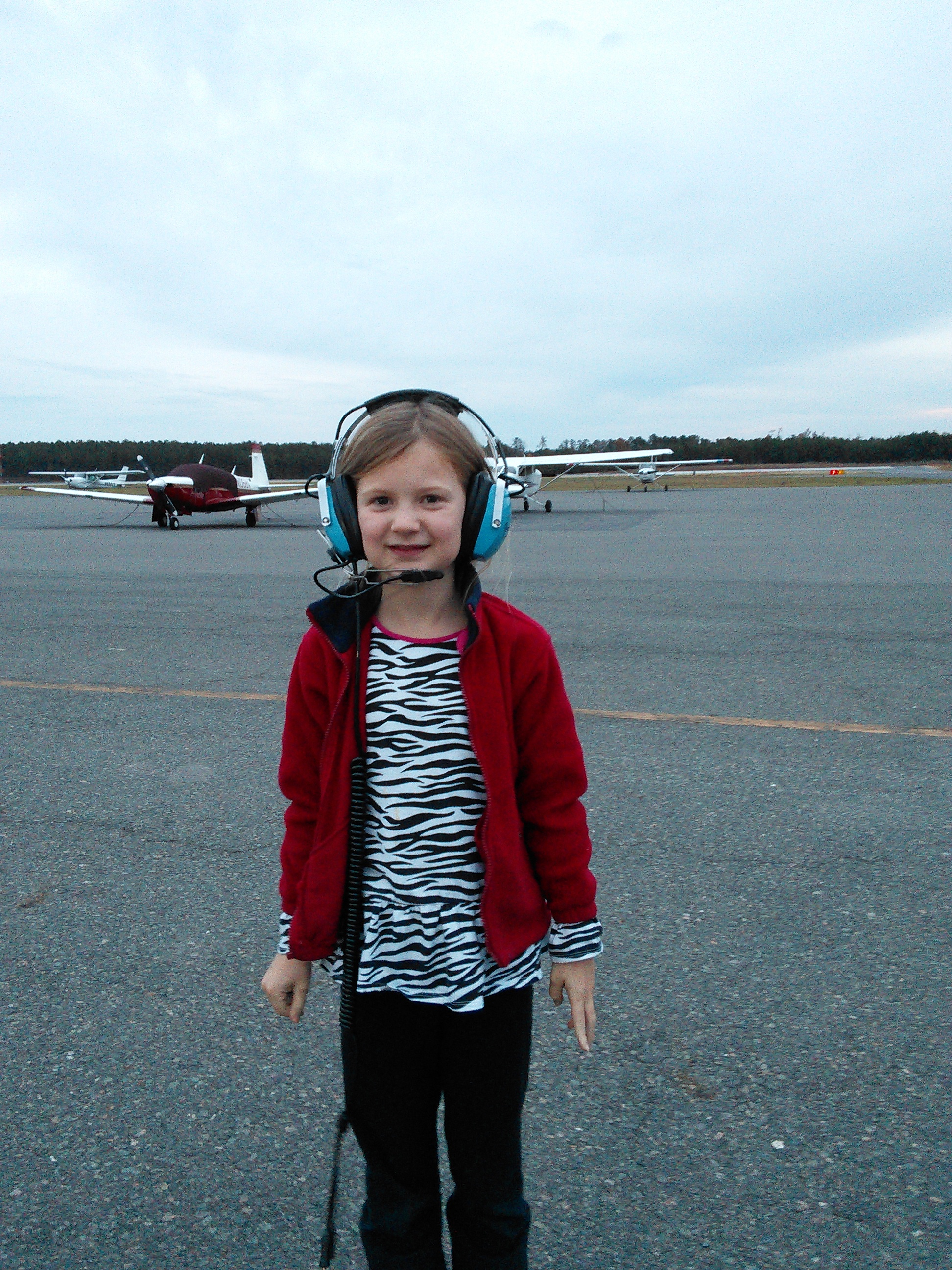
Believe it or not, Saturday was the first time I had flown since my last post.  I was able to log 1.8 hours of flight time on a gorgeous Saturday morning.  I took my daughter up for about 45 minutes and then took my son up for about an hour.  They enjoy completely different aspects of flying so I had to plan my practice to cater to them.  My daughter loves for her “belly to tickle” so I would do the more roller-coaster maneuvers with her.  However, she gets really bored practicing landings and pattern work.  When we started performing those, she said it could be her brother’s turn.

On the other hand, he “likes flying, but not falling.”  I performed a stall for the first time with him in the plane and he grabbed the yoke!  He let go very quickly but I gave him a hard time about it for the rest of the day.  However, he likes pattern work so I did short-field and soft-field take-offs and landings.  I was high on final for one approach into Siler City (Aunt Bee’s hometown) and performed a forward slip to lose altitude.  He looked at me and said “why are we flying sideways?”

After flying, we stayed for the Second Saturday cookout and watched all the other pilots and students take advantage of the great weather.  I am finishing up another semester of seminary and hopefully can begin training for the Instrument Rating this summer.

Real Weather Diversion

One of the joy’s of being a VFR rated pilot is getting a cross-country flight completely planned, checking weather and loading up the family for a day at the airport only to get to fly for 30 minutes and land because the weather forecast was COMPLETELY OFF!  Weather was forecast for today as partly sunny to cloudy, but with cloud bases several thousand feet above my planned altitude.  There was a SLIGHT chance of rain this evening night but I planned on being back on the ground by 2:00pm.  I pre-flight the plane, take-off and notice that the clouds looked a lot lower than forecast.  I decided to change my altitude from 3,500 to 2,500 feet to be safe.  After requesting flight following from Fayetteville Approach, I settled in for a quick cross-country.  That was sunk by the controller letting me know that there was moderate precipitation at my destination and it was headed my direction and would be at Sanford within an hour.  Cancel cross-country and head back to land.  It was a virtual aviation traffic jam at KTTA with all of the planes trying to land ahead of the weather.

Someone told me once that stockbrokers, weathermen, and politicians are the only professions where you can be wrong ALL OF THE TIME and still keep your job.  Today was proof.

Checking Out in New Plane.

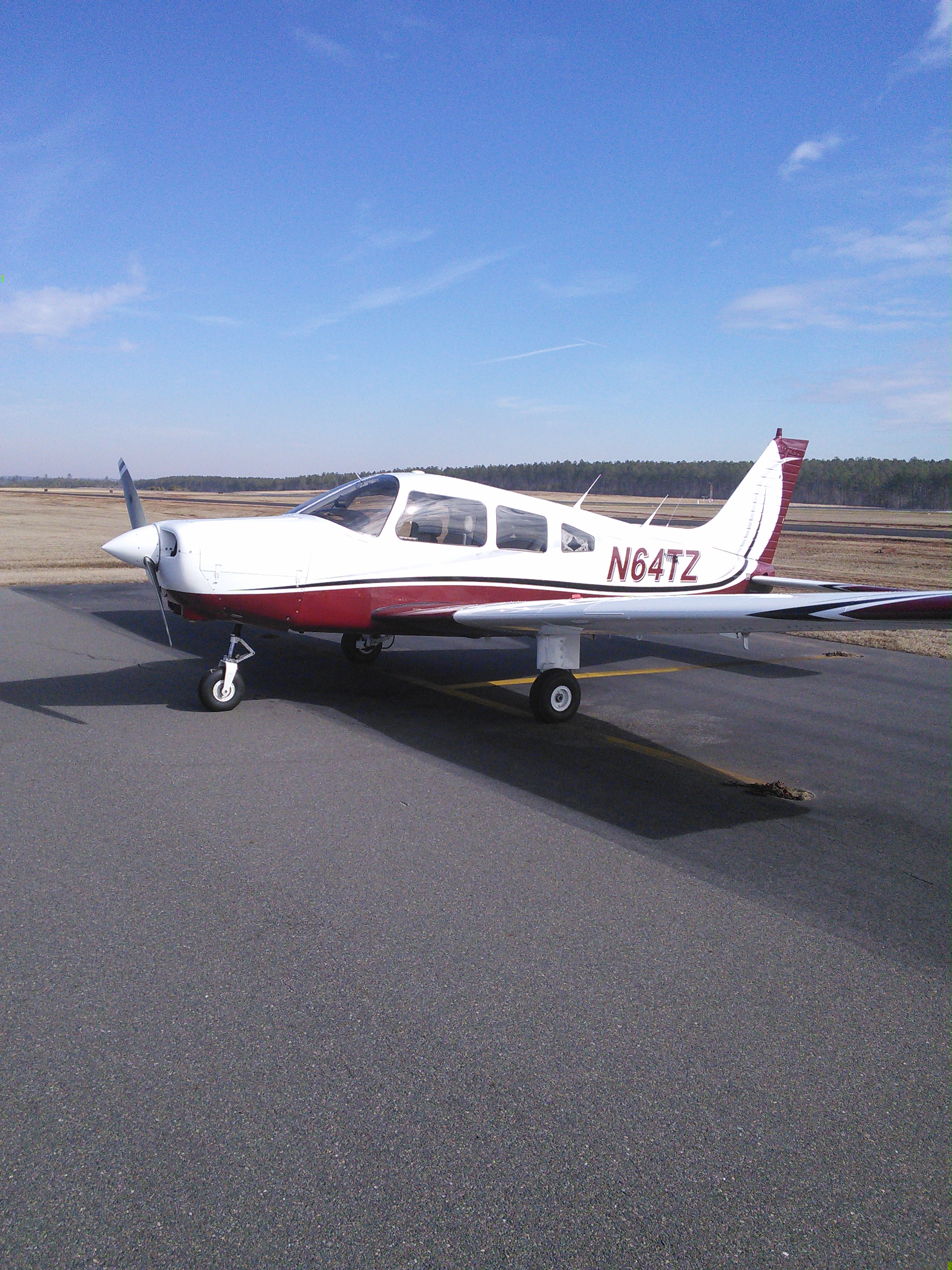
On January 31, I met back up with Richard to start getting checked-out in one of the Club’s Piper Cherokee’s.  This plane is a 4-seater with a 160 hp engine.  It outweighs a Cessna 152 by several hundred pounds.  With this plane, I will be able to complete the training for my instrument rating and can carry the whole family or just larger passengers than the 152.  The Cherokee is much more stable in the air than the 152 and was a joy to fly.

IMG_20140201_120025


I am trying to clear up the time to attend Instrument Ground School on Monday nights, but that is dependent on school and work schedules.  It is only offered once a year so I really don’t want to miss the opportunity.

New Year

Well, it has been a while since my last post.  I haven’t been able to fly much as the winter weather and holiday busyness get in the way.  Over Christmas, the family traveled back home to Arkansas and I was able to fly the day after Christmas with an instructor at Central Flying Service at KLIT (Bill and Hillary Clinton Little Rock National Airport aka “Hillbilly Airport” or “Adams Field” to the locals).  I checked out in one of their Cessna 172’s.  The 172 is the four seat version of the 152 that I trained in.  It weighs about 700 pounds heavier and had a 180 horsepower engine as opposed to the 110 horsepower in the 152.  The weight difference was noticeable.  The takeoffs required more force on the yoke to get the nose up.  It was also much more stable in the air.

After getting practice using the radio since Little Rock is a Class C airport where the pilot has to communicate with Clearance, Ground, Tower and Departure to go anywhere, we flew to Carlisle to practice landings in the 172.  On the way, we practiced the usual steep turns, power-on and power-off stalls.  On the way and at Carlisle, I noticed that the 172 flies similar to the 152 with the biggest differences being your speed is higher throughout the pattern and you keep “power” through final instead of just gliding onto the runway like the 152 usually requires.  It took some getting used to, but I caught on fairly quickly.  After about an hour of flying, my instructor said that he has seen enough and we could fly back to Little Rock.  I am now “checked-out” to rent a 172 at Central Flying Service, for what that is worth.

Other than that, I worked as an ambassador at Wings of Carolina during the January 11 Second Saturday cook-out.  An ambassador shows guests around the club and answers questions.  The weather was HORRIBLE and a severe thunderstorm rolled through Sanford around lunch.  The storm contained the 2nd strongest straight-line winds ever recorded at Raleigh, beating our every hurricane except for Hazel.  The strongest winds were clocked at 86 mph!  The wind scooted all of the airplanes across the tarmac until it took up all of the slack in the chains.  It was quite the sight!  We were also trapped at the club  for a couple of hours since several trees were knocked down across the exit road.

Seminary starts back this week so studying begins again.  I hope to be able to continue training towards my instrument rating as the money becomes available.

Cross Country Time Building

After a 3 week lay-off from flying, I took my son on a short cross-country flight from Sanford (KTTA) to Clinton (KCTZ).  This is a flight of 52 nautical miles each way.  In order to qualify as a cross-country flight, it must be at least 50 nautical miles from airport to airport.  I have to have 50 hours of cross-country time in order to qualify for the instrument rating (plus other instrument training, of course).  My son absolutely loves flying!  He said the most fun was the “bumps.”  There was a little wind and light turbulence today, which is surprising, because it was COLD!  The little heater in the 152 really couldn’t keep up at 3,000 feet and we stayed bundled up in our coats for the entire flight.  Other than that, it was an uneventful flight on a beautiful day after Thanksgiving.  A lot of other people were taking advantage of the day off of work, or were tired of family, and were out flying today.  We had a very busy traffic pattern and my son enjoyed helping to look for traffic.

FYI, some have wondered why I don’t name my kids but due to the age we live in, I don’t want to identify them on the internet.

I hope everyone had a great Thanksgiving!

Tomorrow will be another great flying day, but I am delivering the sermon on Sunday so I need to spend the day prepping and studying.

First Passengers.

Saturday was the runway reopening celebration at the Wings of Carolina Flying Club.  The kids were able to watch a flour bombing and spot landing competition.  However, the highlight of their day and mine was after things had settled down, I was able to take my son up for 3 touch-and-go landings and take my daughter up for 2 touch-and-goes.  They both loved it!

IMG_20131109_155816 IMG_20131109_171137


He said that he enjoyed it much more than flying on an airliner because he could feel more movement, could see more and could listen on the radio.  She said flying made “her tummy tickle.”

PASSED!

Whoo, what a day!  To spoil the ending, I am now a private pilot.  The checkride lasted a total of 3.8 hours!  I also had a FAA examiner sit in on the oral portion of the exam and watch me perform the preflight inspection on the airplane.  He said he would have flown with us if the plane had 4 seats.  Thank goodness it only has 2!!!  In addition, the winds were at a 60 degree crosswind at 9 knots (about 10-11 mph) gusting to 17 knots (19 mph).  It was bad enough that the weather service issued a notice for moderate turbulence.  When I finished, I was worn out!

I arrived at the airport at 7:30am this morning to make sure I had everything.  The checkride requires that you bring all of your documentation, airplane maintenance and log books, cross-country planning, weight and balance calculations and performance calculations for take-off and landing distances under current weight and weather.  There are also multiple government forms to be filled out.

I met with Greg, my examiner, at 9 am and we started shortly thereafter.  We filled out more paperwork, including the Pilot’s Bill of Rights from the FAA (which Greg said was more like a Miranda warning than “rights”).  We then started looking at log books and he asked questions regarding inspections and maintenance.  He went through the Practical Test Standards pretty much sequentially (http://www.faa.gov/training_testing/testing/test_standards/media/FAA-S-8081-14B.pdf) asking dozens of questions.  At about 9:30, the FAA examiner showed up and gave us the standard government briefing that he was there as an observer, not an examiner, and we were to continue as normal.  However, he went over my logbooks and paperwork with a fine-tooth comb.  He found one endorsement missing, where my instructor had not acknowledged that I had passed a written test covering the systems of the Cessna 152 prior to solo (I had).  This caused some panic as he wasn’t going to let me continue the checkride unless I was endorsed.  Unfortunately, Richard was in South Carolina.  Luckily, the flying club had a record of my test in their files and the FAA was satisfied.

Once Greg was satisfied with my knowledge, he passed me on the “oral” portion of the checkride.  I then began to preflight the airplane with him and the FAA examiner.  Nothing big, but a plastic fairing around the landing gear strut was loose and they wanted it tightened before flight.  I found maintenance and had that done and away Greg and I went onto the flight portion.

Man, was it windy and bumpy!  The winds at 3,000 feet were at 30 knots (35 mph)!  They were a tailwind for my faux cross-country and I reached my first checkpoint in 4.5 minutes, versus the 8 minutes it took on Tuesday.  Once I reached the first checkpoint, Greg told me he thought the clouds had lowered and I was in the clouds so put on my “hood.”  I flew by instruments and his instructions back to Raleigh Executive Jetport where he let me take the hood off to land.  He then had me demonstrate a soft-field takeoff, fly up to 2,000 feet and perform steep turns and stalls, then fly back to the airport and perform a short-field landing.  However, when I was downwind from the runway, he pulled the throttle and said my engine just quit.  I performed an “engine-out” landing and included a forward-slip to lose altitude.  He then had me take back off with a short-field takeoff, come around and land again in a short-field landing.  At this point, he said to taxi back to the flying club, secure the airplane, and to stop by the terminal building if I wanted to pick up my temporary pilot’s license!  Whew!  The flight time lasted 1.4 hours.

Now I think it is time to hit the sack.  I didn’t sleep at all last night and got up around 5 am this morning for my 4 hour test.  I am mentally and physically exhausted!  Milestone number 1 is completed.  Next up is to fly 50 hours of cross-country before beginning the training on the Instrument Rating.  However, another hurdle is now financing.  Flying takes money and we are going to need to raise some to continue on from here.  I told Greg about Great Commission Aviation and he said that if it was meant to be, it would happen.  I guess that can have some theological undertones.  Pray that he is right.

IMG_20131109_102959 IMG_20131109_155456

Checkride prep done, getting nervous

I finished my last checkride prep flight yesterday with Richard.  The checkride requires you to plan a cross-country flight, start the flight, reach your first checkpoint within 5 minutes of the planned time and then the examiner will stop you and move on to other items.  We flew this leg of the cross-country, then I put on the vision limiting device (hood) and flew by instrument only.  Richard gave me verbal commands and then had me take the hood off and look up when I was on final with the runway about to land.  We also went over paperwork, log books, and what to expect.

However, I did not expect for an FAA observer to be there!  I was called today to let me know that the examiner would himself be observed and tested by the FAA during his test of ME.  I was told to prepare for extra detailed questions due to this.  Now, the blood pressure is starting to go up!

Friday is the day.  Please pray for my nerves and success.

Good Example

I wanted to let you guys know of a good example of what Great Commission Aviation is being created to do.  I have made friends here at Southeastern Baptist Theological Seminary who are in the foreign mission study field.  We will call them Bill and Sue to keep them anonymous on the internet.  The International Mission Board (IMB) wants missionaries to not be identifiable as Christians on the internet so we try to scrub their identities.  Anyway, Bill and Sue want to present the Gospel to nomadic tribes in the North Africa desert.  He has a private pilot’s license but had to pay an exorbitant amount of money to obtain the license.  He explained that driving around the desert looking for the nomadic tribes is almost pointless, but a small plane could locate them by air, then land or fly back to a landing strip where an off-road vehicle could be used to reach the people group.  However, he doesn’t know of anyway to do this and no one will help.  Hopefully, one day in the not-so-distant future, Great Commission Aviation can be that help.

I am coming across these types of stories every day.  I am praying that we can assist these missionaries and future missionaries in their efforts.


Checkride Prep Almost Done!

The past couple of weeks, I have flown solo once and with Richard twice.  We have been completing my simulated instrument time with a hood on my head which only allows me to see the instruments.  I have to fly as if I can’t see outside.  We have also been reviewing all the different required maneuvers and “polishing” my skills.  Landing after landing after landing and stall after stall after stall.  He said that I am within standards and would like to schedule my checkride within the next couple of weeks.  That is the final exam for the private pilot license.  It will be a long day.  Typically, a FAA checkride will last 4-5 hours!  The examiner will start with the oral portion of the exam and ask me questions in a conversational format about all of the “book” stuff, including required documentation, medical issues, aerodynamics, radio, navigation, instruments, engines, etc.  After he/she is satisfied that I know the information, we will get into the plane and I will treat the examiner just like a passenger, except he will let me know what he wants done.  After I demonstrate all the maneuvers, he either passes me or fails a portion of the exam.  If he fails a portion, I will have to fly with Richard again, he will have to sign off that I have learned the missed portion of the exam, and then I retake that portion with the examiner.

Well, it is time to really hit the books for a couple of weeks to brush up on everything.  Hopefully, my next post will be at checkride time.